-
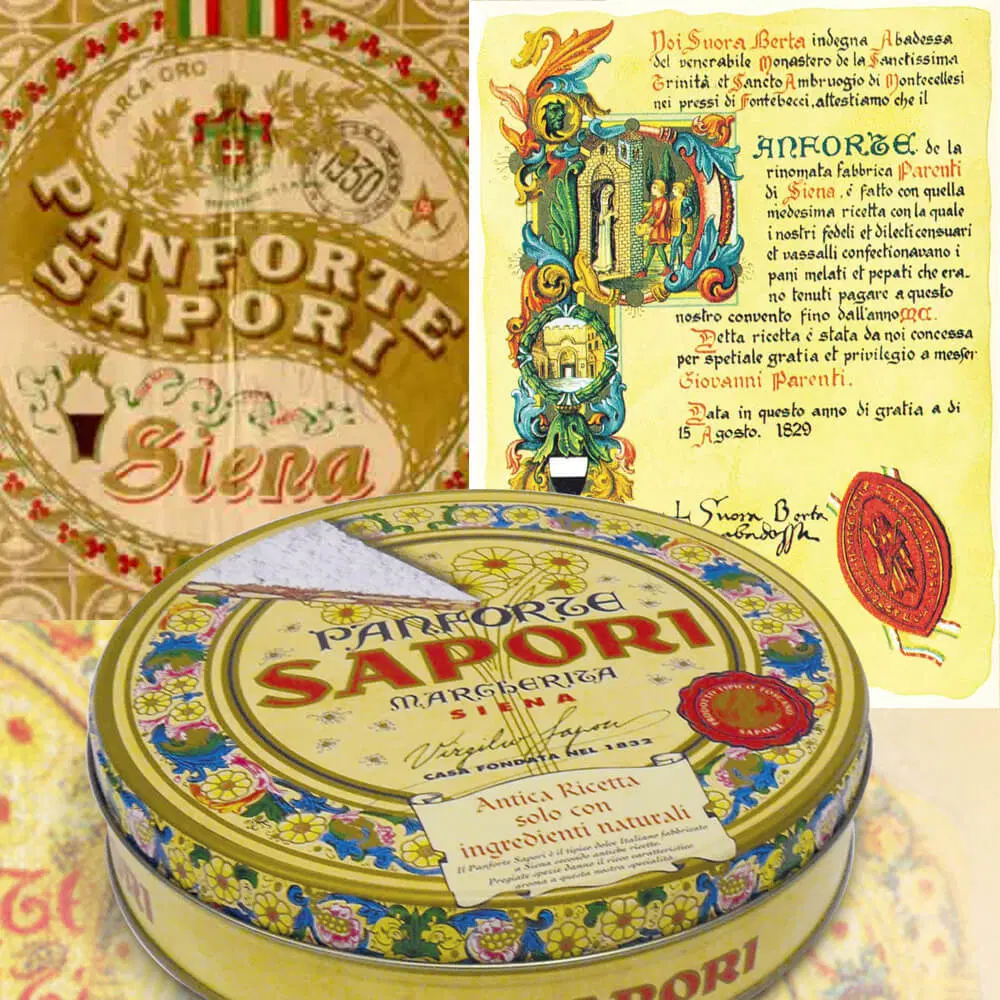
1832
Virgilio Sapori and his shop
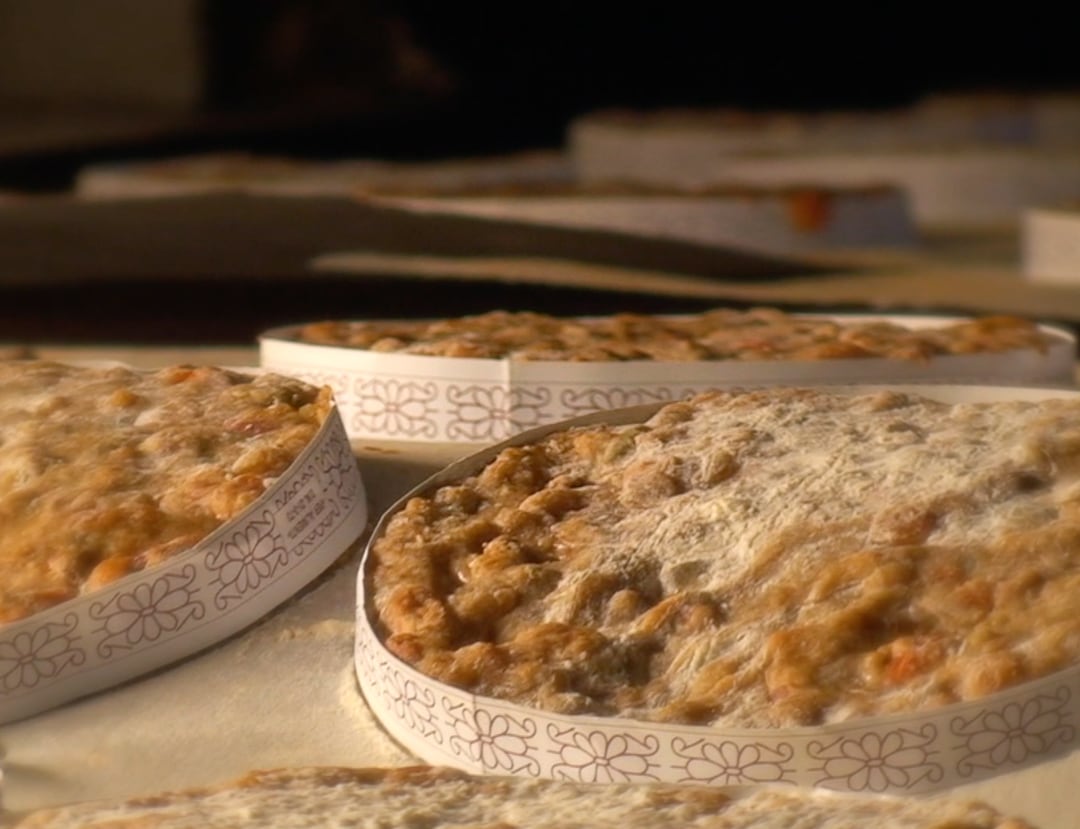
Our story began long ago, in a bygone era when a curious Tuscan pharmacist, Virgilio Sapori, saw in his small spice shop the ideal place to create a typical local sweet based on honey and spices: Panforte, which even today retains an unbreakable bond with the recipe from that distant 1832.
-
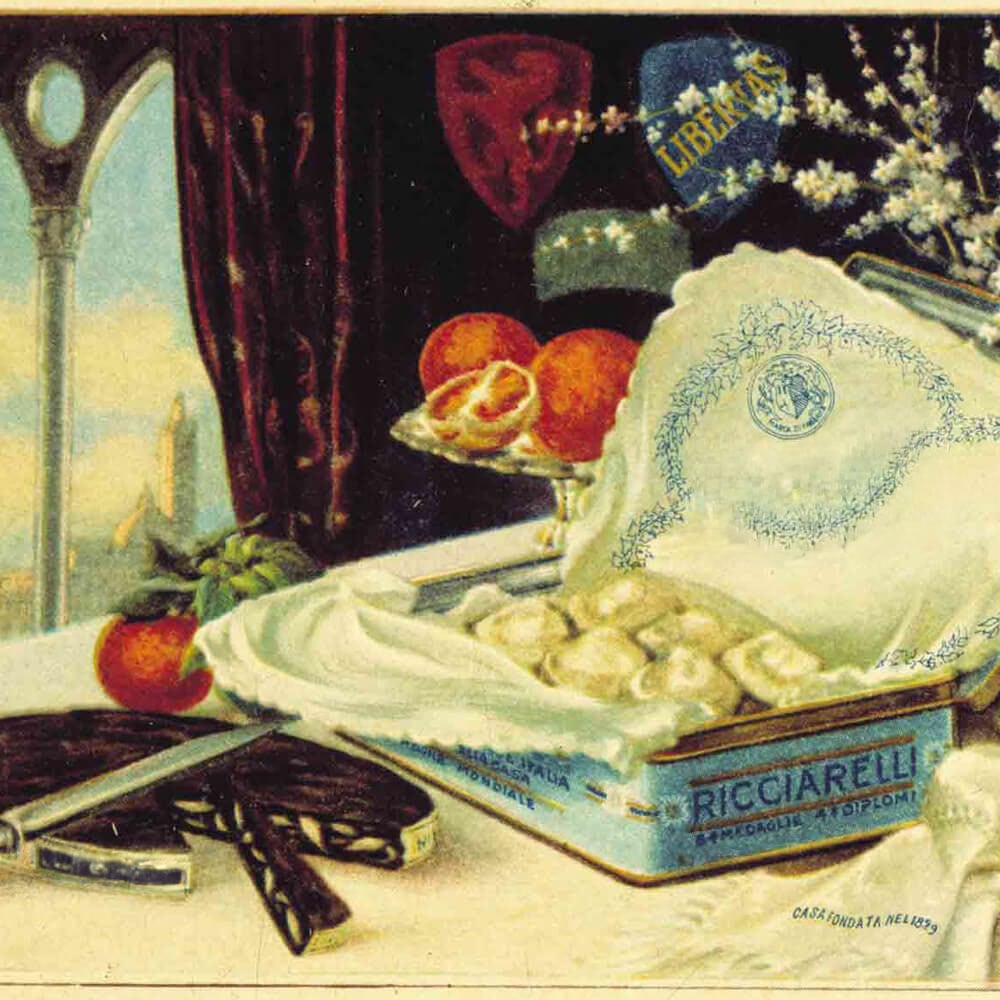
1850
The ancient origins of Ricciarelli
Virgilio continued his work by also dedicating himself to Ricciarelli, the almond paste-based confectionery with a curled shape and a crunchy surface, whose origins are still debated today.
Their origins are lost between history and legend. It is said that they derive from Marzipan, which was already used in Siena in the 15th century to make marzapanetti. An ancient legend, however, attributes their spread to Ricciardetto della Gherardesca, who, upon returning from the Crusades, spoke of peculiar foreign sweets, curled like the slippers of sultans.
-
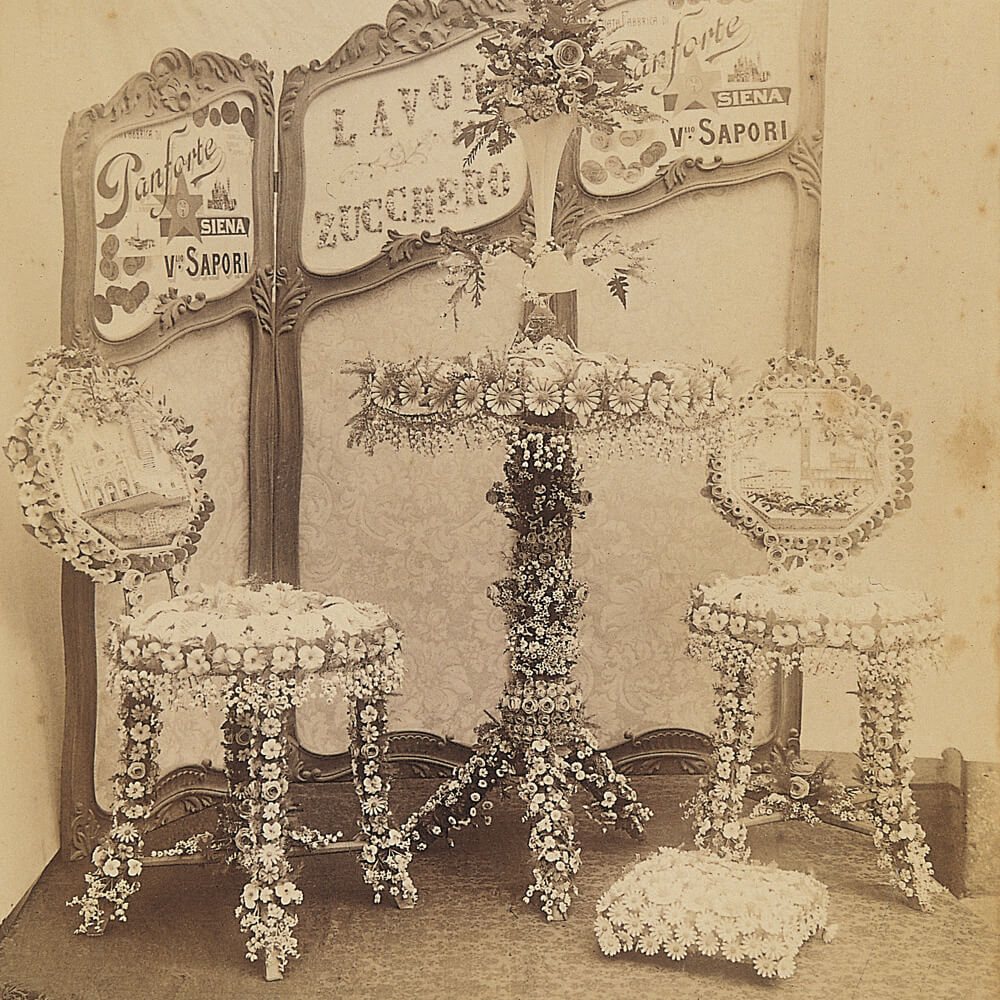
Early 1900s
Sapori at the Paris Universal Exhibition
In 1900, Dante, Virgilio’s son, presented his traditional sweets at the Paris Universal Exhibition, thanks to a small, well-appointed stand. The international calling of Sapori products, moreover, was already largely established, as the company was founded right on the Via Francigena, a route travelled by thousands of pilgrims journeying to the holy sites of the Christian religion, and also a hub for intense commercial exchanges.
Since then, Sapori has continued to maintain the interest of foreign consumers both through the international distribution of its products and by participating in food trade events. -
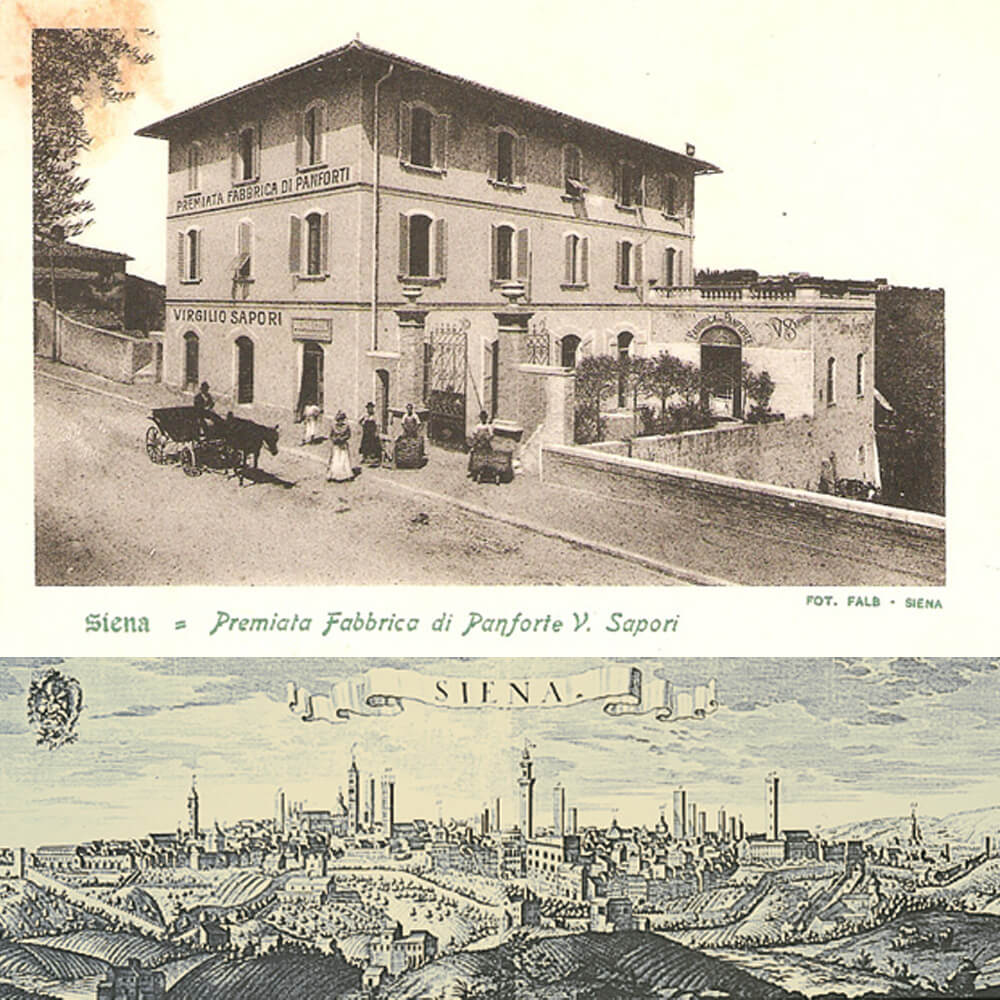
The 1940s
A New Sapori Factory
It was 1944 when the Sapori factory, located near the railway station, was unfortunately razed to the ground during a bombing raid. The situation was extremely difficult, but the determination not to give up, even in the face of the most negative events, and faith in the future allowed for a rapid rebirth.
The new factory bore witness to Sapori’s innovation, thanks to the introduction of new production lines for products such as biscuits, nougat, sweets, panettone, colomba, and chocolate.
The philosophy remains the same: to stay true to the artisanal tradition of the Tuscan lands, without ever compromising on progress and product quality. -
The 1950s
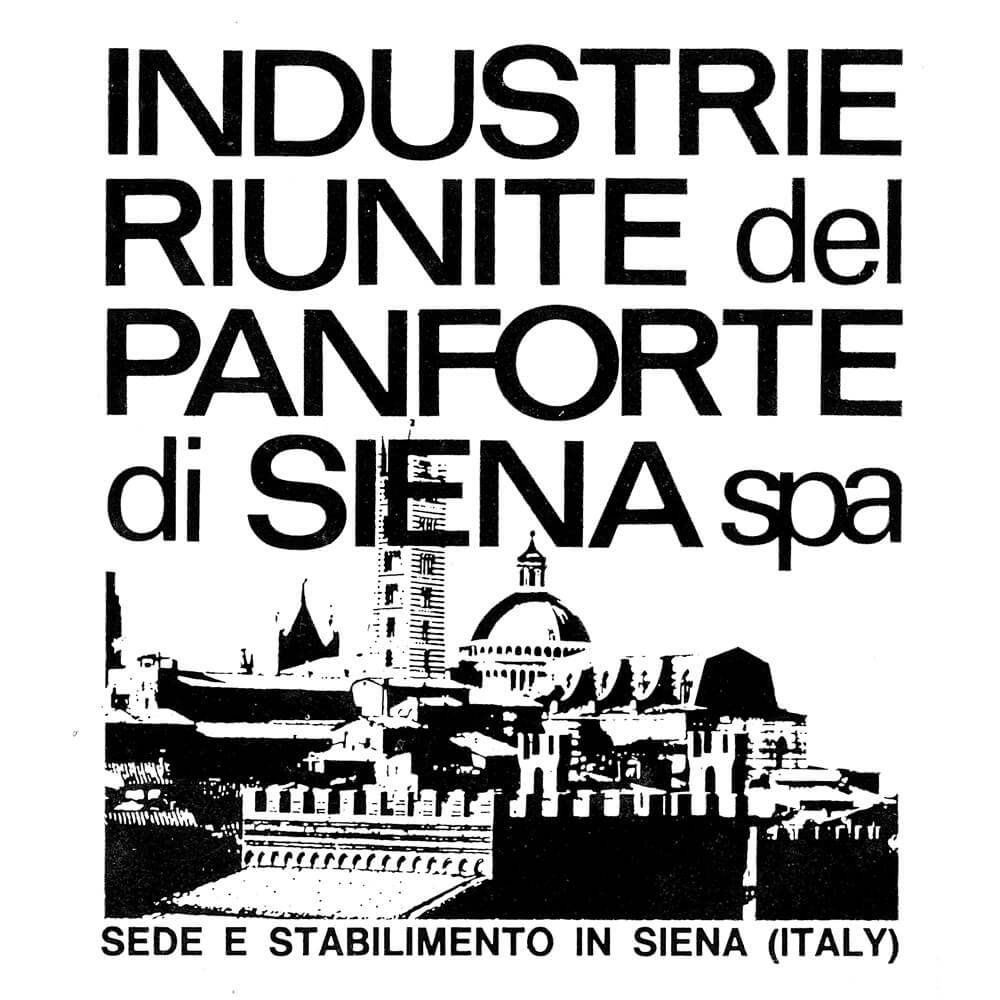
Industrie Riunite del Panforte di Siena
Technological development, product diversification, and the commercial growth of traditional Sienese products led to the creation of Industrie Riunite del Panforte di Siena in 1956. The strategic project aimed to unite and promote the leading brands of Panforte and other Sienese confectionery.
Sapori immediately became the key player, establishing multiple offices across Europe and facilitating the entry of major international partners, such as J. Lyons and Allied Breweries Limited, between 1972 and 1980. It was during this period that the famous octagonal panforte packaging was born, the box that replaced the ancient hand-wrapping method. -
2004
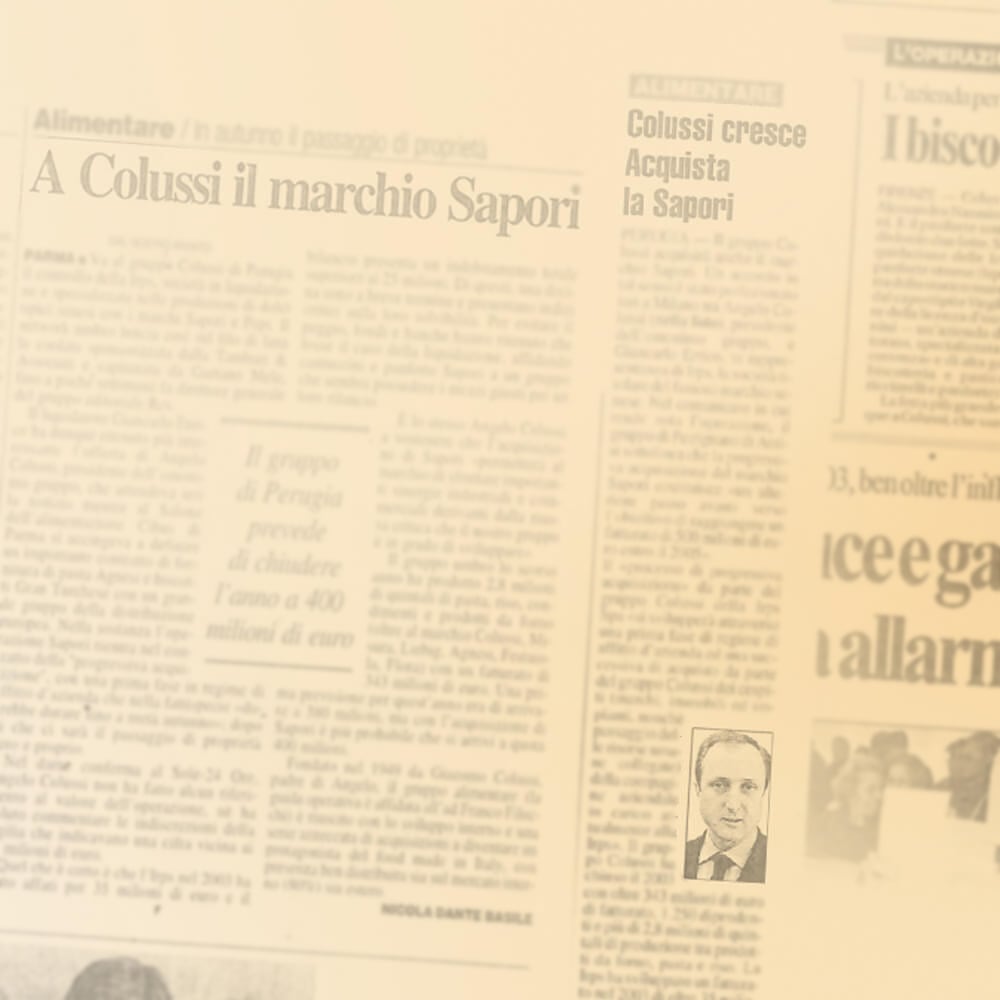
Sapori joins the Colussi Group
In 2004, the Sapori brand was acquired by the COLUSSI GROUP, creating an important commercial and strategic synergy. This facilitated the worldwide expansion of Tuscan products and the image of Siena. What continues to make us unique is our connection to an ancient tradition, always respected, and the passion with which our raw materials are processed.
-
The 2000s
Sapori: Beyond the Usual Sweets
After reasserting its identity as “Confectioners since 1832”, in 2014 Sapori placed its products and raw materials at the forefront, renewing its promise to offer high-quality sweets while respecting tradition and continuing to strengthen its image as a leading brand in the Tuscan confectionery market, right up to the present day.
In 2016, the collaboration with the University of Gastronomic Sciences of Pollenzo and Slow Food strengthened the bond with the local territory and the commitment to the pursuit of excellence. Quality, passion, and food awareness thus became the values of a brand that looks to the future without forgetting its roots.